How to find restaurants opening soon in Chicago
New Chicago restaurants show up in one city dataset months before opening. Here's how to read the license flag that marks a real pre-open venue, free or by API.
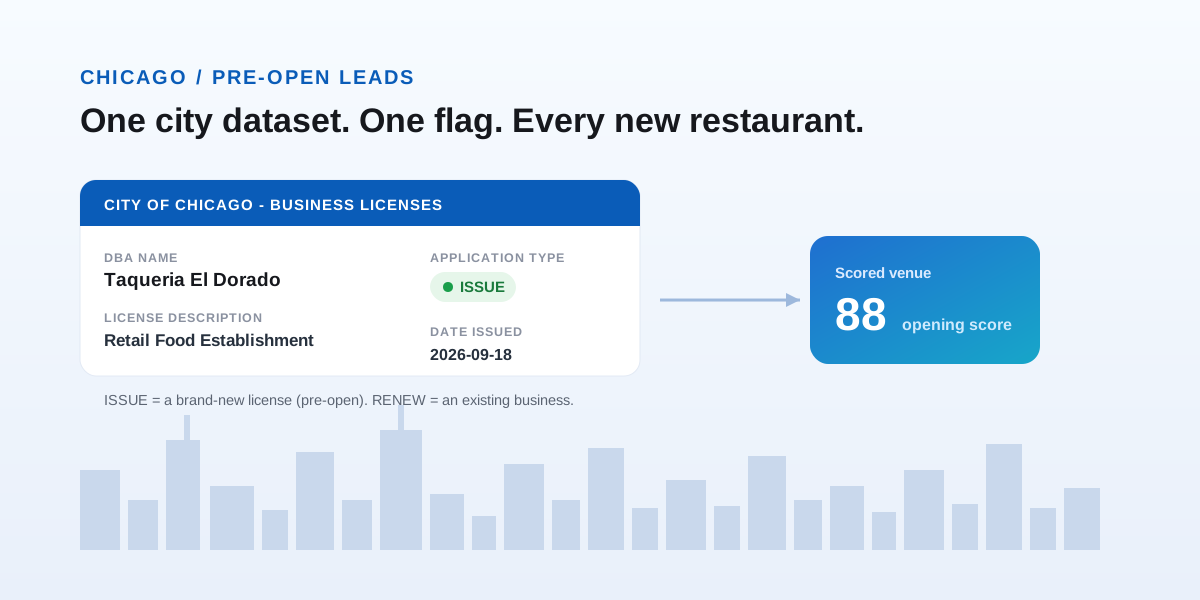
Every new Chicago restaurant you want to sell to is already in a city dataset. You just aren’t reading it yet.
By the time SuSu or Pizzeria Gabbo shows up on Resy, it has a POS, an insurance policy, and a full kitchen. The deals are done.
New Chicago restaurants show up in public city records one to six months before the doors open, and Chicago makes it easier than almost anywhere: the food license and the liquor license both live in one open dataset, each stamped with a flag that says whether it’s brand new or just a renewal. Read that flag and you’re first in the door instead of last.
Let me show you exactly how, whether you work it by hand or pull it by API.
What does “opening soon” mean for a Chicago restaurant?
A Chicago restaurant that’s opening soon has committed to opening but hasn’t served a paying customer yet. It has applied for the licenses a restaurant needs, which means money is moving and vendors haven’t been chosen. That’s different from a place already open, where the POS, the distributor, and the insurance are already locked in.
Think about who this window is for.
If you sell point-of-sale systems, you want the owner before they sign with Toast.
If you distribute food, pour beer, or install kitchen hoods, the first vendor in usually stays.
And Chicago produces a steady stream of these. The city issued roughly 900 new Retail Food Establishment and on-premise liquor licenses in just the first nine months of 2026, going by the City of Chicago Business Licenses dataset. Most are independents, the operators nobody has sold to yet.
And they mostly stick around. You’ve heard 90% of restaurants fail in year one. It’s false, traced to a 2003 commercial, not a study. Bureau of Labor Statistics data puts real first-year closure around 17%, per DirectOrders, and Datassential measured just 0.9% for 2025 openings, its lowest since 2018. The Chicago venue you sell to this quarter is very likely still open and still buying next year.
Why the Chicago dining guides can’t help you
The lists that rank for “new restaurant openings in Chicago” are built for diners, not for you. The Infatuation, Resy, WTTW, and TimeOut Chicago publish great roundups of where to eat this weekend. Every one of them covers a restaurant at or after opening, which is exactly when it stops being a lead.
Type that phrase into Google yourself. The whole first page is dining guides, and not one of them is a lead source.
That’s the trap. Those pages answer “where should I eat in Chicago,” not “who’s about to open so I can sell to them.” Same words, opposite intent.
A restaurant makes almost all of its vendor decisions in the months before it opens. Reach it in month two and you’re helpful. Reach it in month eight and you’re asking someone to rip out something that already works.
Where do new Chicago restaurants show up first?
New Chicago restaurants show up first in the city’s own business-license data, and this is where Chicago beats most cities. Instead of a state alcohol board plus a separate health-permit portal, Chicago’s Department of Business Affairs and Consumer Protection issues both the food license and the local liquor license, and both land in one dataset with a flag that marks a new license versus a renewal.
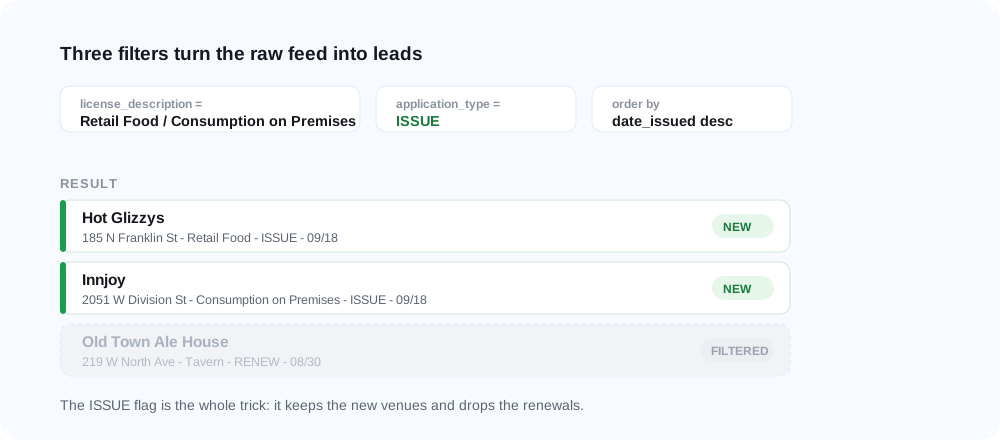
Here’s the concrete recipe.
Open the Business Licenses dataset on the city data portal.
Filter license_description to “Retail Food Establishment” for restaurants, or “Consumption on Premises - Incidental Activity” and “Tavern” for bars.
Then filter application_type to ISSUE. That single field is the whole trick: ISSUE means a genuinely new license, RENEW means an existing business. Sort by date_issued, newest first.
What you get is a live list of venues that just got licensed. In the days before I wrote this, that list included Hot Glizzys on N Franklin, Taqueria El Dorado on W Fullerton, and Morrisons Soul and Smoke on S Cottage Grove, all brand-new Retail Food licenses. Real venues, dated this week.
How do you read a Chicago business license like a lead?
Read a Chicago license as a lead by pulling four fields: the doing-business-as name, the address, the license description, and the issue date. A new Retail Food or on-premise liquor license at a fresh address is a restaurant setting up. The address lets you cross-check a building permit, and the name is your path to the owner.
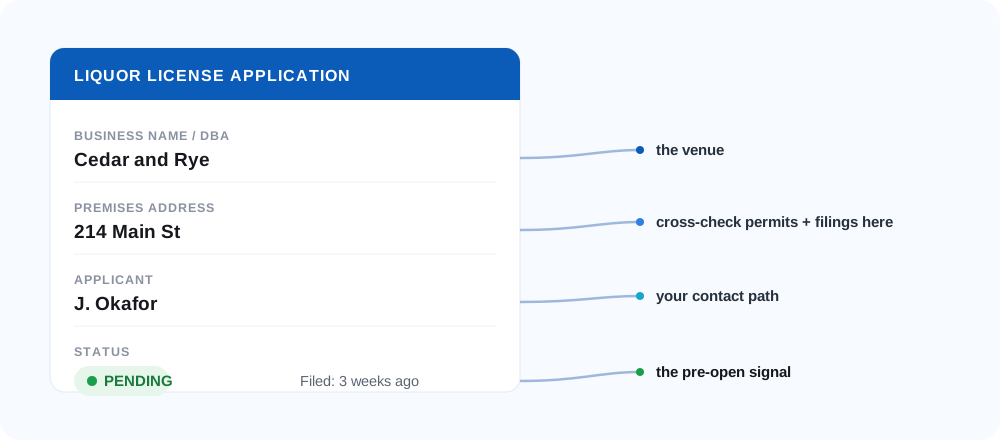
Chicago’s license data is public and carries no private fields. It’s why anyone, including you, can work it.
One license alone can still mislead you. A lone liquor license might be a change of ownership at a bar that’s been open for years. The signal gets strong when two records line up at one address: a new food license and a new liquor license, or a license and a fresh building permit. Chicago publishes building permits on the same portal, so the cross-check is one more search, not a different system.
How far ahead can you find a Chicago opening?
You can typically find a Chicago restaurant one to six months before it opens. The license is the clock. An operator applies for the Retail Food and liquor licenses during buildout, because inspections and approvals take weeks, so the record appears in the city dataset well before opening night.
There’s an outside number on this. Restaurant Pipeline, which tracks openings for a living, measures roughly 82 days on average from a venue’s first public record to its opening. So the typical Chicago window is real, and wide enough to work a genuine sales cycle.
The practical move is to watch the ISSUE feed weekly. Chicago adds new food and liquor licenses constantly, and a license issued this week is a venue you can reach while it’s still deciding who to buy from.
How do you score which Chicago openings are worth your time?
Score a Chicago opening by how many records point at the same address and how recent they are. One license is a maybe. A new food license plus a new liquor license plus a recent building permit at the same address is a near-certain new restaurant. Add recency, because a license from last week beats one from ten months ago that may have stalled.
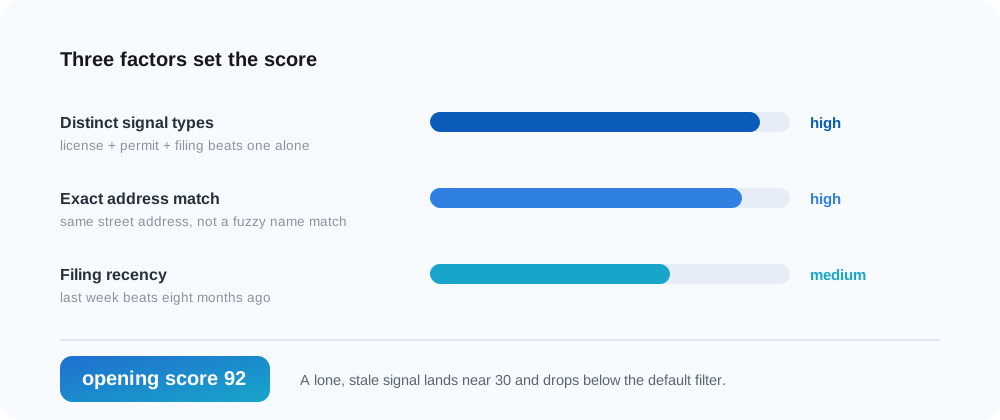
So build a simple score.
Give a venue points for each distinct record type. Food license, liquor license, building permit. Two beats one.
Give it more points when the records share an exact address. Matching on business name alone will burn you, because Chicago DBAs repeat.
Weight recent records higher. A pre-open window is a moving target, and a stale license often means a project that never happened.
What a real Chicago pre-open lead looks like
A strong Chicago lead is one address with two or three fresh records on it. Picture a new Retail Food Establishment license for a West Loop storefront, a new Consumption on Premises liquor license at the same address from the same month, and a building permit for a kitchen buildout filed six weeks earlier. Same address, three records, all recent. That’s not a maybe. That’s a restaurant opening this quarter.
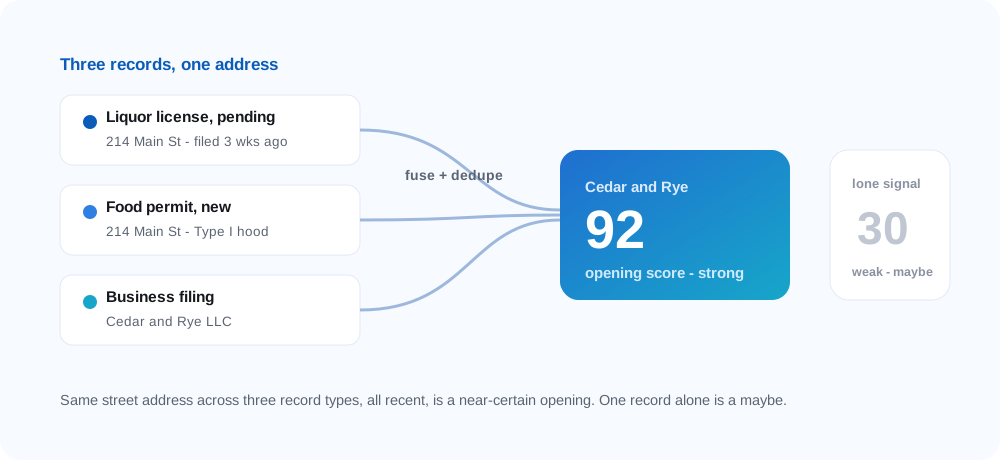
Compare it to the weak version. One liquor license, no food license, no permit. Could be a new bar. Could be a renewal you misread. You’d call and find out, and half the time you’d waste the call.
The strong lead also hands you a contact path and a map pin. The DBA name is a business you can look up, and the address tells your rep exactly where to drive in the city.
This is why fusion beats a raw license download. A CSV of Chicago licenses is noise. Two or three records agreeing on one address is a lead you can act on today.
How RestoSignals covers Chicago in one call
RestoSignals fuses Chicago’s new food licenses, liquor licenses, and building activity into one venue record with an opening score, so you get a ranked list of pre-open Chicago restaurants without filtering the raw dataset yourself. Illinois is live today, and every lead is scored on how many records match, whether they share an address, and how recent they are.
The score is the part that saves your week. Instead of reading raw license rows and guessing which are real, you get venues already ranked by how likely they are to be a soon-to-open restaurant.
You can call it from code or point an AI agent at the hosted MCP endpoint and ask for new Chicago openings. Same data, either way, and the agent path is the one thing a weekly email list can’t match.
The free tier is 100 leads, no card, and one credit equals one returned lead. That’s enough to test whether the Chicago venues in your territory are worth a workflow before you pay anything.
Start with one Chicago neighborhood this week
Pick the neighborhood or ward where you already sell. Open the Chicago Business Licenses dataset, filter to new-issue Retail Food and on-premise liquor licenses, and pull the last 30 days for that area. That’s your first batch of pre-open Chicago leads, free, in about an hour.
Then decide whether you’d rather run that filter every week by hand, ward by ward, or let an API return it scored in one call. Either path beats waiting for a dining guide to tell you what your competitor already knew a month ago.
Mukul Dutt is the founder of RestoSignals, an API that surfaces restaurants and bars before they open by fusing public liquor, permit, and business-filing records into one scored venue.
FAQ
How do I find out about new restaurants opening in Chicago before they open?
Search the City of Chicago Business Licenses dataset for a Retail Food Establishment or on-premise liquor license with an application type of ISSUE (a new license, not a renewal) and a recent issue date. That's a restaurant setting up, usually one to six months from opening. To skip the manual work, a lead API returns the same records already scored.
Where can I search Chicago restaurant licenses?
The City of Chicago's open-data portal at data.cityofchicago.org publishes every business license, including Retail Food Establishment and on-premise liquor. You can also use the BACP business-license lookup at chicago.gov to search by license type, ward, neighborhood, or business name. Both are free and public.
How far in advance can you find a Chicago restaurant before it opens?
Usually one to six months. Restaurant Pipeline, a lead service, measures about 82 days on average from a venue's first public record to opening. A Chicago restaurant applies for its food and liquor licenses during buildout, so the license record appears in the city dataset well before the doors open.
How many new restaurants open in Chicago each year?
As a proxy, the City of Chicago issued roughly 900 new (ISSUE, not renewal) Retail Food Establishment and on-premise liquor licenses in the first nine months of 2026. Nationally, about 16,718 new restaurants opened in the US in 2025, and independents were about 88% of them, per restaurantdata.com.
Is there an API for Chicago restaurant opening leads?
Yes. RestoSignals covers Illinois today and exposes new-opening leads as a REST API and a hosted MCP endpoint, fusing Chicago food licenses, liquor licenses, and building activity into one scored venue. The free tier is 100 leads, no card.
Do most new Chicago restaurants fail in the first year?
No. The 90% first-year failure claim is a myth traced to a 2003 commercial. Bureau of Labor Statistics data puts real first-year closure near 17%, and Datassential measured just 0.9% for 2025 openings. The Chicago venue you sold to last month is almost certainly still open.
Find venues opening near you
100 free leads, no card. One platform for restaurants & bars about to open.