How to find restaurants opening soon in New York
New York publishes pending liquor applications and not-yet-inspected food permits as open data. Here's how to read them to find NYC restaurants before they open.
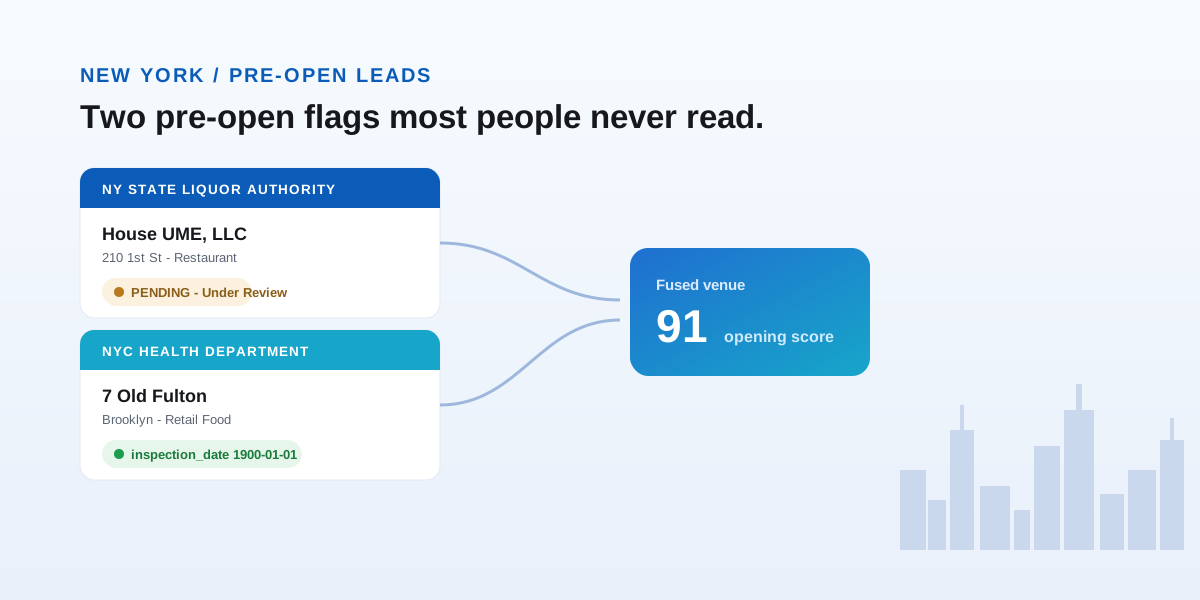
Every new New York restaurant you want to sell to is already in a public dataset. You just aren’t reading it yet.
By the time a place shows up on The Infatuation or @newopeningsnyc, it has a POS, an insurance policy, and a full kitchen. The deals are done.
New York gives you two ways to see a restaurant before it opens that almost no one uses: the State Liquor Authority publishes pending applications, and the city health department flags brand-new food establishments before their first inspection. Read those and you’re first in the door instead of last.
Let me show you exactly how, whether you work it by hand or pull it by API.
What does “opening soon” mean for a New York restaurant?
A New York restaurant that’s opening soon has committed to opening but hasn’t served a paying customer yet. It has applied for a liquor license or registered with the health department, which means money is moving and vendors haven’t been chosen. That’s different from a place already open, where the POS, the distributor, and the insurance are already locked in.
Think about who this window is for.
If you sell point-of-sale systems, you want the owner before they sign with Toast.
If you distribute food, pour beer, or install kitchen hoods, the first vendor in usually stays.
And they mostly stick around. You’ve heard 90% of restaurants fail in year one. It’s false, traced to a 2003 commercial, not a study. Bureau of Labor Statistics data puts real first-year closure around 17%, per DirectOrders, and Datassential measured just 0.9% for 2025 openings, its lowest since 2018. The New York venue you sell to this quarter is very likely still open and still buying next year.
Why the NYC dining guides can’t help you
The lists that rank for “new restaurant openings nyc” are built for diners, not for you. The Infatuation, Resy, Michelin, and the @newopeningsnyc feed publish great roundups of where to eat this weekend. Every one of them covers a restaurant at or after opening, which is exactly when it stops being a lead.
Search it and you’ll get The Infatuation, a Michelin radar list, and someone’s running Substack. Perfect for booking dinner. Useless for building a pipeline.
That’s the trap. Those pages answer “where should I eat in New York,” not “who’s about to open so I can sell to them.” Same words, opposite intent.
A restaurant makes almost all of its vendor decisions in the months before it opens. Reach it in month two and you’re helpful. Reach it in month eight and you’re asking someone to rip out something that already works.
Where do new New York restaurants show up first?
New York restaurants show up first across three public datasets, and two of them carry a pre-open flag most people never notice. The State Liquor Authority publishes pending applications, the city health department marks new food establishments before their first inspection, and the state corporation registry lists new business filings. Together they let you see a venue while it’s still under construction.
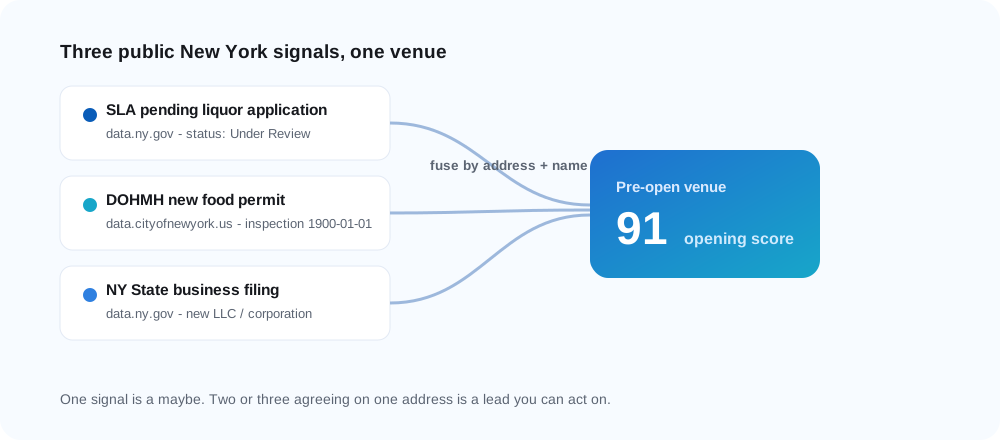
Here’s what makes New York unusually good for this.
Most states only publish liquor licenses once they’re issued. New York publishes them while they’re still pending, so you can see a venue before it’s even approved.
The city health department goes one better. A new restaurant that has registered but hasn’t had its first inspection sits in the open data with a placeholder date, which is a clean list of places that are set up but not yet serving.
And the state corporation registry adds the business filing that confirms a real operator behind the name.
How do you read a pending SLA liquor application?
Read a pending State Liquor Authority application as a lead by pulling four fields: the premises name, the address, the license description, and the status. A restaurant application marked Under Review or Conditionally Approved is a venue that has committed to opening and is weeks to months out. The address lets you cross-check a food permit, and the name is your path to the owner.
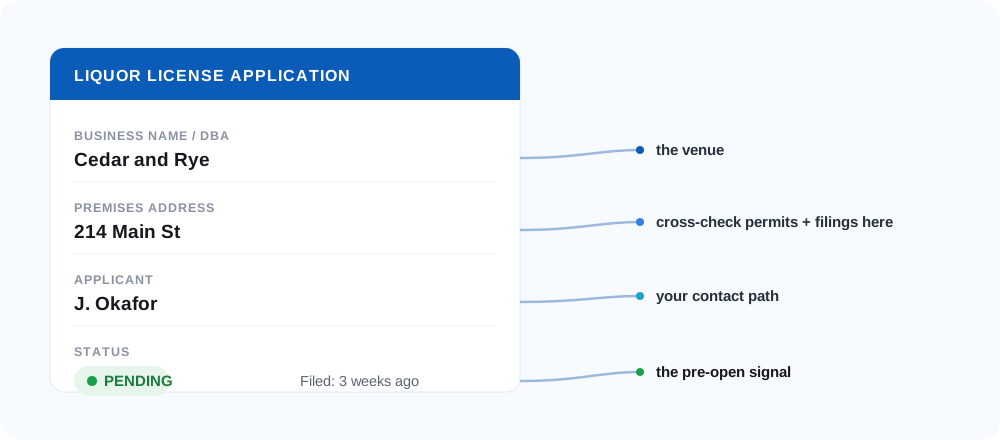
You can pull this yourself from the SLA pending-licenses dataset on the state open-data portal. It’s free and public, with no private fields.
Each row carries the premises name, the actual address of the premises, the license class, the date received, and a status. In the days before I wrote this, the pending list for Manhattan alone included a restaurant application for House UME on 1st Street and a food-and-beverage application for 192 Cafe on 7th Avenue South, both marked Conditionally Approved. Real venues, not yet open.
The status field is the tell. Under Review and Conditionally Approved mean the venue is in the pipeline. That’s your window.
The NYC health-department trick worth knowing
The city health department stamps every not-yet-inspected new food establishment with the placeholder date 1900-01-01, so filtering to that one date returns a clean list of NYC restaurants that have registered but aren’t open yet. It’s the single best free source of pre-open food venues in the city, and almost nobody outside the data world knows it exists.
Here’s why it works. The DOHMH restaurant dataset is built for inspection results, and a place can’t have an inspection date until it has been inspected. So a brand-new establishment gets the 1900-01-01 sentinel until its first visit.
Filter the dataset to that date and you get the pre-open venues. When I checked it, the list included Hana Asian Bistro in Queens, 7 Old Fulton in Brooklyn, and Reves de Miel in Manhattan, each registered with the city but not yet inspected.
Pair one of these with a pending liquor application at the same address and you have a near-certain opening.
How far ahead can you find an NYC opening?
You can typically find a New York restaurant one to six months before it opens. The liquor application is the clock. A New York license takes 30 to 120 days, and operators are told to start 4 to 6 months before opening, so the pending record appears in the SLA data well ahead of the doors.
There’s an outside number on this. Restaurant Pipeline, which tracks openings for a living, measures roughly 82 days on average from a venue’s first public record to its opening. So the typical New York window is real, and wide enough to work a genuine sales cycle.
The practical move is to watch the pending SLA feed and the DOHMH new-establishment list weekly. New York files these constantly, and a venue that shows up this week is one you can reach while it’s still deciding who to buy from.
How do you score which NYC openings are worth your time?
Score a New York opening by how many records point at the same venue and how recent they are. One pending application is a maybe. A pending liquor application plus a not-yet-inspected food permit plus a fresh business filing at the same address is a near-certain new restaurant. Add recency, because an application from last week beats one from ten months ago that may have stalled.
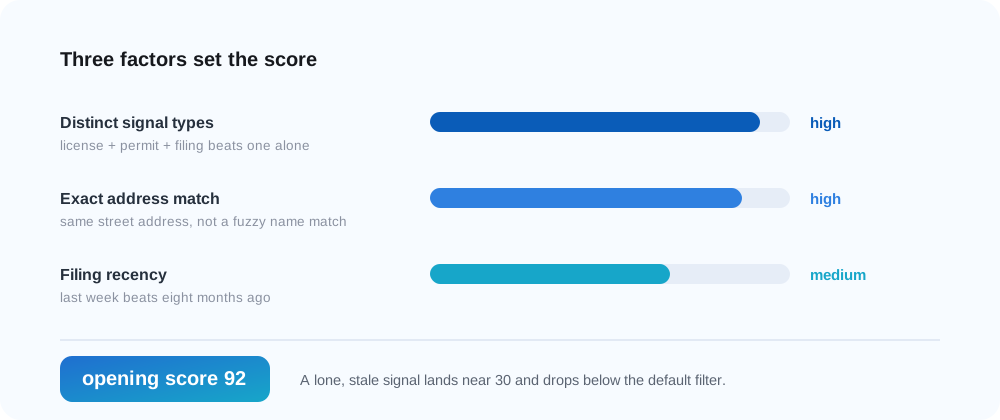
So build a simple score.
Give a venue points for each distinct record. Pending liquor, new food permit, business filing. Two beats one.
Give it more points when the records share an exact address. Matching on business name alone will burn you in a city this size.
Weight recent records higher. A pre-open window is a moving target, and a stale application often means a project that never happened.
What a real New York pre-open lead looks like
A strong New York lead is one address with two or three fresh records on it. Picture a pending SLA restaurant application on a Lower East Side block marked Under Review, a DOHMH food establishment at the same address stamped 1900-01-01, and a new LLC filed with the state under the same name last month. Same address, three records, all recent. That’s not a maybe. That’s a restaurant opening this quarter.
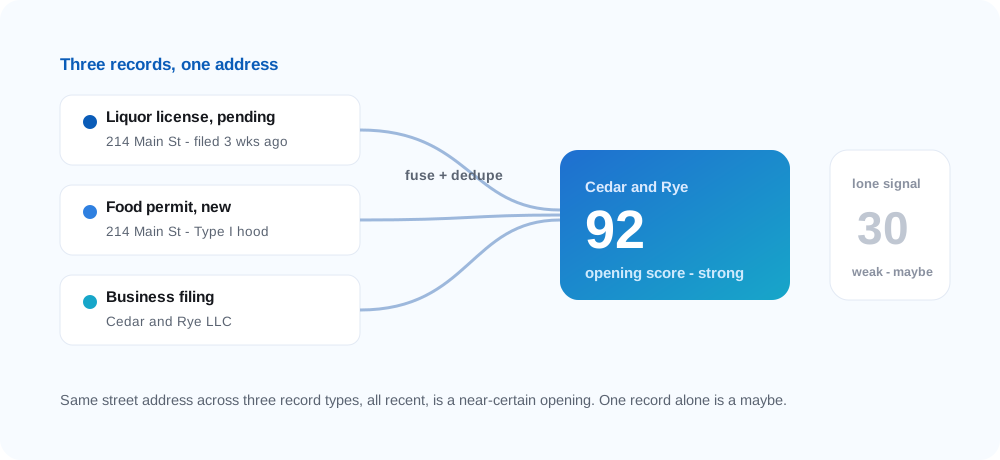
Compare it to the weak version. One pending liquor application, no food permit, no filing. Could be real. Could be an application that stalls for a year. You’d call and find out, and half the time you’d waste the call.
The strong lead also hands you a contact path and a map pin. The premises name is a business you can look up, and the address tells your rep exactly which block to walk.
This is why fusion beats a raw application download. A CSV of pending licenses is noise. Two or three records agreeing on one address is a lead you can act on today.
How RestoSignals covers New York in one call
RestoSignals fuses New York’s pending SLA liquor applications, NYC food permits, and state business filings into one venue record with an opening score, so you get a ranked list of pre-open New York restaurants without touching three separate portals. New York is our deepest-coverage state, and every lead is scored on how many records match, whether they share an address, and how recent they are.
The score is the part that saves your week. Instead of reading raw application rows and guessing which are real, you get venues already ranked by how likely they are to be a soon-to-open restaurant.
You can call it from code or point an AI agent at the hosted MCP endpoint and ask for new New York openings. Same data, either way, and the agent path is the one thing a weekly email list can’t match.
The free tier is 100 leads, no card, and one credit equals one returned lead. That’s enough to test whether the New York venues in your territory are worth a workflow before you pay anything.
Start with one borough this week
Pick the borough where you already sell. Pull the pending SLA applications for that county, filter the DOHMH data to the 1900-01-01 new-establishment flag for the same borough, and match them by address. That’s your first batch of pre-open New York leads, free, in about an hour.
Then decide whether you’d rather run that match every week by hand, borough by borough, or let an API return it scored in one call. Either path beats waiting for a dining guide to tell you what your competitor already knew a month ago.
Mukul Dutt is the founder of RestoSignals, an API that surfaces restaurants and bars before they open by fusing public liquor, permit, and business-filing records into one scored venue.
FAQ
How do I find new restaurants opening in NYC before they open?
Search the New York State Liquor Authority's pending-applications dataset for a restaurant application marked Under Review or Conditionally Approved, then cross-check the NYC health department's new food-establishment records at the same address. Two records on one address is a real project, usually one to six months from opening. A lead API returns the same records already scored.
Where can I see pending NYC liquor license applications?
The New York State Liquor Authority publishes pending applications as open data at data.ny.gov (the Current SLA Pending Licenses set). Each row shows the premises name, address, license class, the date received, and a status like Under Review or Conditionally Approved. Pending means the venue has applied but hasn't opened.
What is the NYC food permit list for new restaurants?
The NYC Department of Health publishes restaurant inspection data, and a brand-new establishment that has registered but not yet had its first inspection is stamped with the date 1900-01-01. Filtering to that date gives you a list of NYC restaurants that just registered and are not yet open.
How far in advance can you find an NYC restaurant before it opens?
Usually one to six months. A New York liquor license takes 30 to 120 days, and operators are told to start 4 to 6 months before opening, so the pending application appears well ahead. Restaurant Pipeline, a lead service, measures about 82 days on average from a venue's first public record to opening.
Is there an API for NYC restaurant opening leads?
Yes. RestoSignals covers New York today and exposes new-opening leads as a REST API and a hosted MCP endpoint, fusing SLA pending liquor applications, NYC food permits, and state business filings into one scored venue. The free tier is 100 leads, no card.
Do most new NYC restaurants fail in the first year?
No. The 90% first-year failure claim is a myth traced to a 2003 commercial. Bureau of Labor Statistics data puts real first-year closure near 17%, and Datassential measured just 0.9% for 2025 openings. The New York venue you sold to last month is almost certainly still open.
Find venues opening near you
100 free leads, no card. One platform for restaurants & bars about to open.