How much does a liquor license cost? (2026 state guide)
A liquor license costs a few hundred dollars in some states and over $1 million in others. Here's what a liquor license actually costs in 2026, state by state.
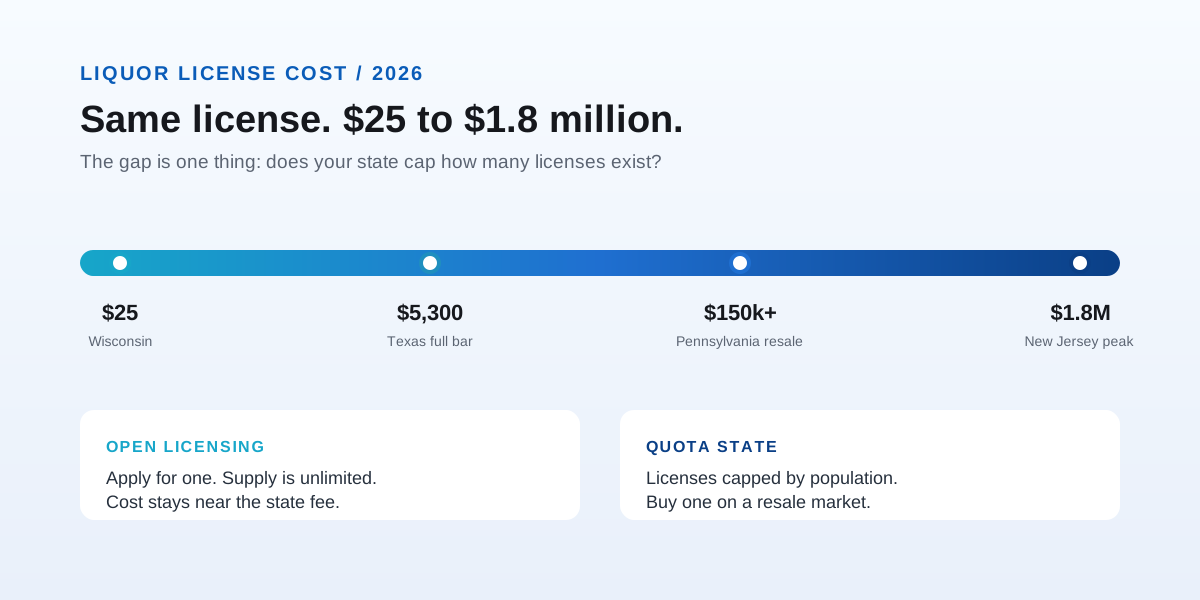
You can get a liquor license for $25. You can also pay $1.8 million for one.
Same country. Same drink. The gap between those two numbers is the whole story of what a liquor license costs, and almost nobody explains it straight.
A liquor license costs $1,000 to $3,000 a year in state fees in most states, going by 2026 industry guides. But the state fee is the small part. The real number depends on whether your state caps how many licenses exist, and in the states that do, an actual license can run $100,000 to over $1 million. Below is what you’ll pay, state by state, and how to tell which kind of state you’re in before you sign a lease.
How much does a liquor license cost in 2026?
A full liquor license costs roughly $300 to $10,000 a year in state fees in an open-licensing state, and a beer-and-wine license runs about $150 to $2,700, per Santé HQ’s 2026 state guide. The national average annual fee lands between $1,000 and $3,000. That covers the paperwork. It does not cover the license itself in a quota state, where the real cost can pass $1 million.
So there are two numbers hiding inside the question.
One is the annual state fee. That’s what you pay the government to hold the license each year. In most of the country it’s a few hundred to a few thousand dollars.
The other is the acquisition cost. In a state that caps how many licenses exist, you can’t just apply for one. You buy an existing license from whoever holds it, at whatever the market charges.
Miss that distinction and your budget is off by three zeros.
Why does a liquor license cost $25 in one state and $1 million in another?
The single biggest cost driver is not the state you’re in. It’s whether that state runs a quota. About 17 states, including California, Florida, New Jersey, Pennsylvania, Massachusetts, and Washington, cap the number of liquor licenses by population, per BottlePOS. When a town hits its cap, the only way in is to buy someone else’s license, and prices explode.
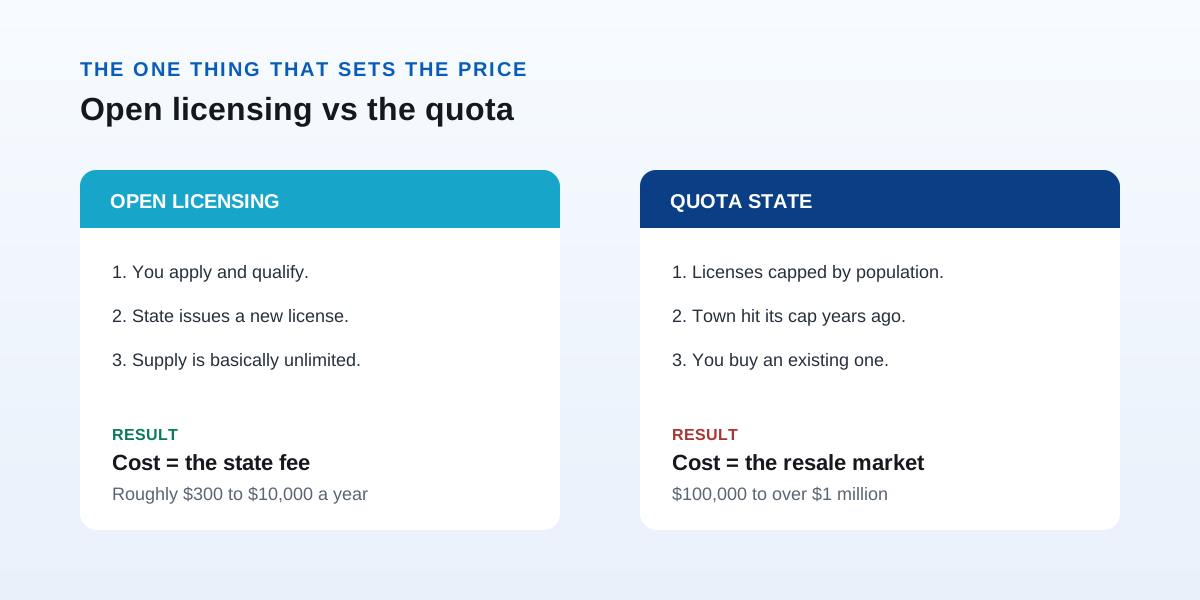
Here’s the mechanism.
An open-licensing state issues a license to anyone who qualifies and pays the fee. Supply is basically unlimited. The price stays near the state fee.
A quota state ties licenses to headcount. New Jersey allows one plenary retail consumption license per 3,000 residents, per WHYY. California caps general licenses at one per 2,000 residents in a county.
Most of those towns hit their limit years ago. No new licenses get created. So a fixed pool of licenses trades hands, and scarcity sets the price.
That’s why a license is $25 in parts of Wisconsin and $1.8 million at its New Jersey peak. Not because Jersey drinkers are special. Because Jersey ran out of licenses.
How much is a liquor license in your state?
A liquor license costs anywhere from $25 to over $1 million depending on your state and whether it caps issuance. The table below shows the 2026 picture for a restaurant or bar serving a full bar: the recurring state fee in open-licensing states, and the secondary-market reality in quota states where the fee is almost beside the point.
| State | Full-bar cost (2026) | Quota state? |
|---|---|---|
| Wisconsin | From ~$25 (municipal) | No |
| Illinois | ~$750 state fee/yr | No |
| Texas | ~$5,300 (MB permit) + $1,100 (FB) | No |
| New York | $4,352 / 2 yrs (NYC) to $1,792 (elsewhere) + $200 filing | No |
| Colorado | $118–$750 state + $75–$500 local | No |
| Washington | $2,200–$2,700/yr | Yes |
| Florida | $468–$1,820/yr state; 4COP quota ~$100k–$550k | Yes |
| California | $10,000+ state; Type 47 resale ~$50k–$400k | Yes |
| Pennsylvania | Restaurant license resale ~$150k–$500k | Yes |
| New Jersey | Resale ~$300k–$1.2M (record ~$1.8M) | Yes |
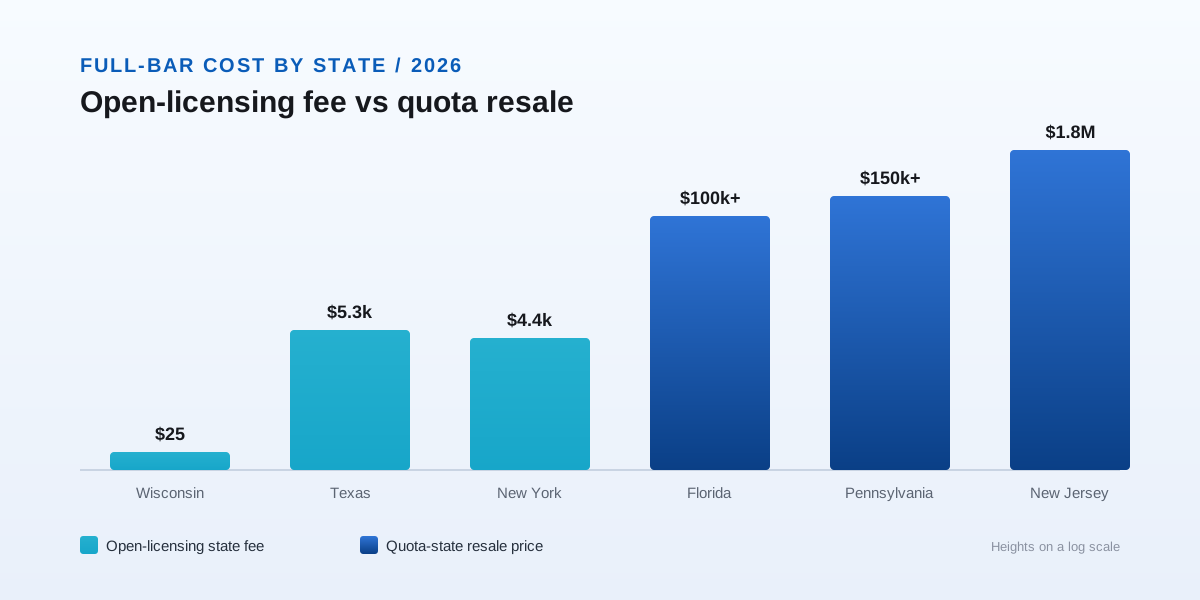
A few things jump out.
Texas is a clean open-licensing example. A restaurant with a full bar pays about $5,300 for the TABC mixed-beverage (MB) permit plus $1,100 for the food-and-beverage certificate, and beer-and-wine-only runs about $1,900. That’s the whole cost. No secondary market.
New York is the same idea, priced by zone. An on-premises license is $4,352 for its two-year term in the four New York City core counties and drops to $1,792 in the rest of the state, plus a $200 non-refundable filing fee, per the New York State Liquor Authority.
Then the quota states break the pattern completely. Florida’s state fee for a full liquor license is under $2,000, but the 4COP quota license behind it trades for $100,000 to $550,000, per Beverage License Specialists. The state fee is a rounding error next to the license.
What actually drives the price of a liquor license?
After the quota question, four things move the number: the type of alcohol you serve, whether you’re on-premise or off, your local city fees, and your concept. A beer-and-wine license is 30 to 60 percent cheaper than a full-spirits license in most states. A restaurant license usually costs less than a standalone bar or nightclub license, because the food requirement signals lower enforcement risk to the regulator.
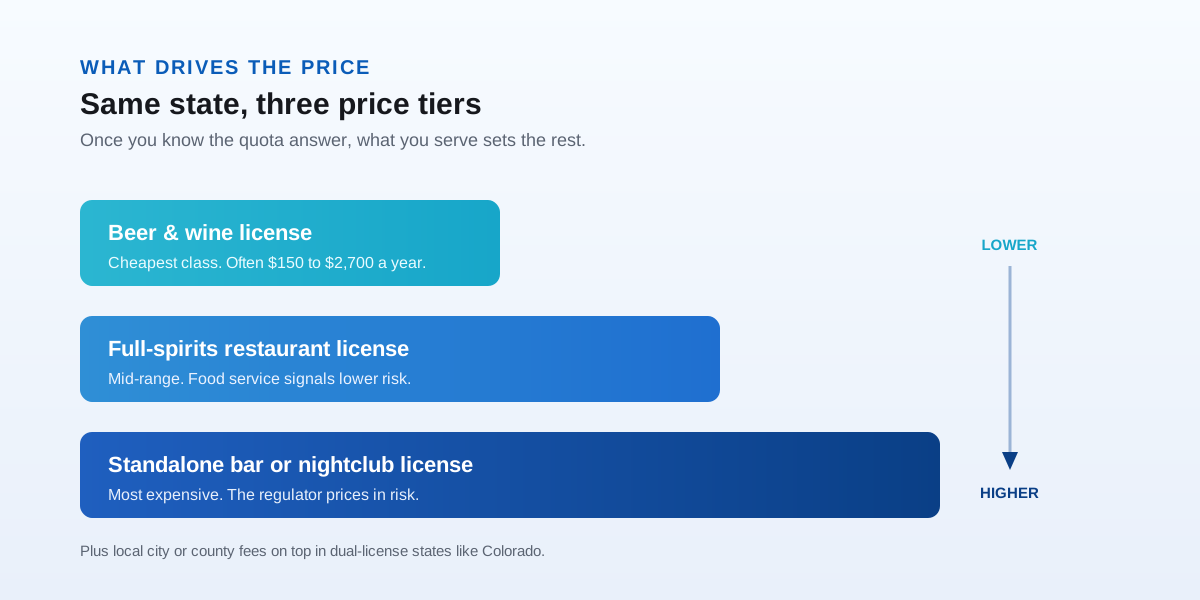
Start with what you pour. Full spirits is the most expensive class, and beer and wine is a separate, cheaper license in nearly every state. If your concept works without cocktails, that one choice can cut your cost by more than half.
Then there’s where you pour it. Serving drinks on-site, the way a bar does, is licensed differently from selling sealed bottles to go the way a liquor store does. On-premise licenses tend to cost more and carry more rules.
Local fees stack on top of that. Many states charge a state fee and then let the city or county add its own. Colorado runs this dual system: $118 to $750 to the state, plus $75 to $500 to the municipality, per LiquorReady.
And your concept moves the number too. A nightclub pays more than a family restaurant for the same spirits license in a lot of places, because the regulator prices in risk.
None of these matter as much as the quota question. But once you know which kind of state you’re in, these are the knobs you actually control.
Is it cheaper to apply for a new license or buy one?
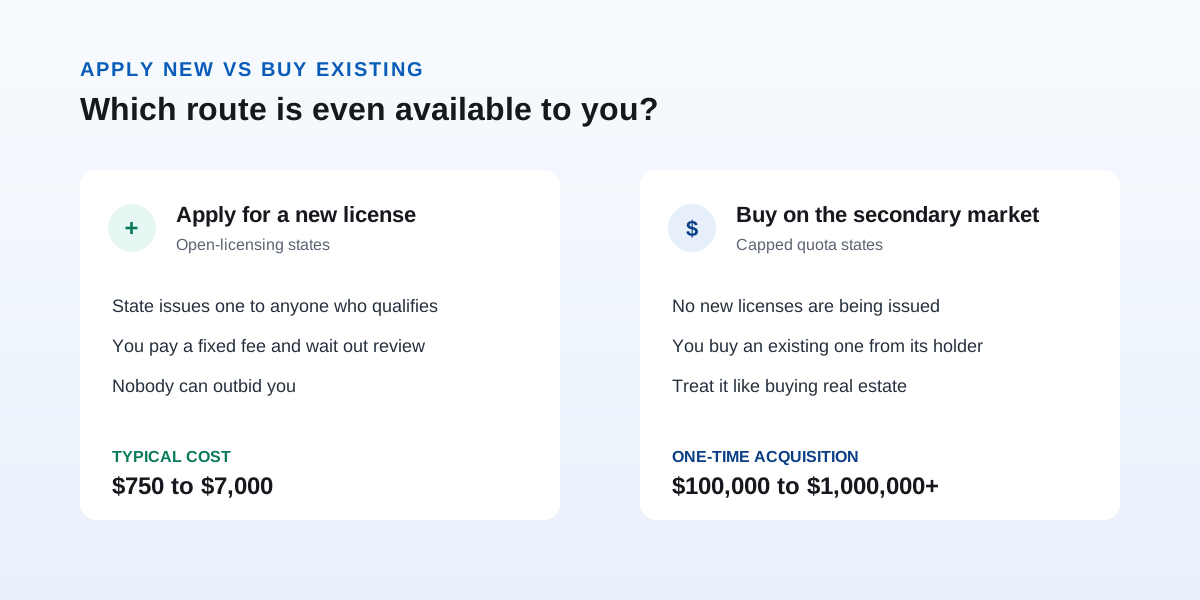
In an open-licensing state, applying for a new license is always cheaper, because the state will issue you one for a set fee. In a quota state where the cap is full, you have no choice but to buy an existing license on the secondary market, and that’s where the six-figure prices live. The same physical license type can cost $750 to apply for in Texas and $400,000 to buy in a capped California county.
So the question answers itself once you know your state.
Open-licensing state? Apply. You pay the fee, you wait out the process, you get a license nobody else can bid you out of.
Quota state at its cap? You’re a buyer on a resale market. Pennsylvania restaurant licenses trade for $150,000 to $500,000. In Boston, a single full-bar license sold for $600,000 for the restaurant attached to View Boston, per BottlePOS.
That secondary-market price is a one-time acquisition, not an annual fee. Once you own it, you renew at the ordinary state rate like everyone else. But you’re buying an asset, and you should treat it like buying real estate, with a broker and an escrow, not like filing a form.
How long does it take to get a liquor license, and when should you apply?
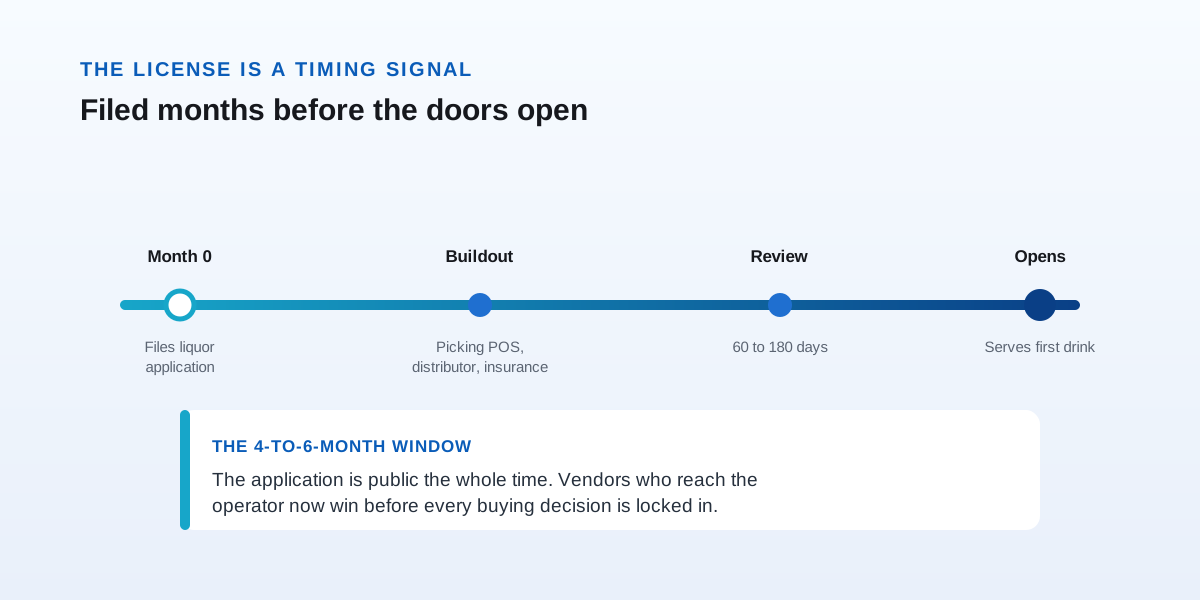
Plan for 60 to 180 days from a complete application to approval, and start 4 to 6 months before you open. California and New York routinely take 6 months or more; Washington runs 60 to 90 days; Oregon can finish in 45. Quota-license transfers take longest, often 6 to 12 months, because you’re moving an asset and clearing local objections, not just filing fees.
The timing is where this stops being trivia and starts being a lead.
A restaurant applies for its liquor license during buildout, months before it serves a drink. That application is a public record. Seasoned operators start the filing 4 to 6 months out, per Sauce, which means the paperwork hits a government database well before the doors open.
That window is the entire premise of what I work on. At RestoSignals, we track those pending liquor filings across 7 states, and a pending liquor application is the single strongest pre-open signal in our model. Our pipeline holds about 22,132 fused venues drawn from 72,409 public records, and the ones with a fresh liquor filing are usually 1 to 6 months from opening.
So the same license cost that’s a headache for the operator is a timing signal for anyone who sells to them. The POS vendor, the food distributor, the insurance broker, the equipment dealer. They all want the operator during the 4-to-6-month window the license application creates, not after everything’s bought.
If you sell to new restaurants, the liquor license is your starting gun. It fires months before anyone else knows the venue exists.
Bottom line: know your state before you sign a lease
Before you budget a dollar for a liquor license, answer one question: does my state cap licenses? If it doesn’t, your cost is the state fee, usually $1,000 to $7,000 for a full bar, and you apply. If it does, price the secondary market first, because a $500,000 license can outweigh your rent, and find out before you sign the lease, not after.
FAQ
What is the cheapest state to get a liquor license?
Wisconsin is among the cheapest, with some municipal licenses starting around $25, and states like Idaho and Illinois charge flat state fees near $750. But the cheapest state fee doesn't mean the cheapest license. A low state fee in a quota county can still sit behind a secondary-market license that costs six figures, so always check whether your state caps issuance.
How much is a liquor license for a small restaurant?
In an open-licensing state, a restaurant that serves a full bar usually pays $1,500 to $7,000 in state and local fees, and a beer-and-wine-only spot pays far less, often $150 to $2,000 a year. Texas charges about $5,300 for the full-bar MB permit; New York charges $4,352 for a two-year on-premises license in New York City. Quota states are the exception and cost much more.
Why are liquor licenses so expensive in New Jersey?
New Jersey caps licenses by population. A town may issue only one plenary retail consumption license per 3,000 residents, and most towns hit that limit decades ago. With no new licenses available, buyers trade existing ones on a secondary market where prices run $300,000 to over $1 million, and the state's record sale was about $1.8 million, per WHYY.
Do I need a liquor license to serve just beer and wine?
Yes, you still need a license, but a beer-and-wine license is a separate, cheaper class than a full liquor license in almost every state. It typically costs $150 to $2,700 a year versus $300 to $10,000 for full spirits service. If your concept doesn't need cocktails, starting with beer and wine is the single biggest way to cut your licensing cost.
How much does it cost to renew a liquor license?
Renewal usually costs the same as the annual state fee, so a few hundred to a few thousand dollars a year in most open-licensing states. New York renews its on-premises license every two years at the same fee tier. A secondary-market license you bought for six figures still renews at the ordinary state fee, since what you paid on the secondary market was for the right to hold it, not an annual charge.
Is it cheaper to buy an existing liquor license or apply for a new one?
In an open-licensing state, applying for a new license is far cheaper, since the state issues one to anyone who qualifies for a set fee. In a quota state where no new licenses are available, you have no choice but to buy an existing one on the secondary market, which is why the same license type can cost $750 in one state and $400,000 in another.
Find venues opening near you
100 free leads, no card. One platform for restaurants & bars about to open.