How to find new restaurant openings in Los Angeles
New LA restaurants file a pending liquor application and a city business registration months before they open. Here's how to read both signals, free or by API.
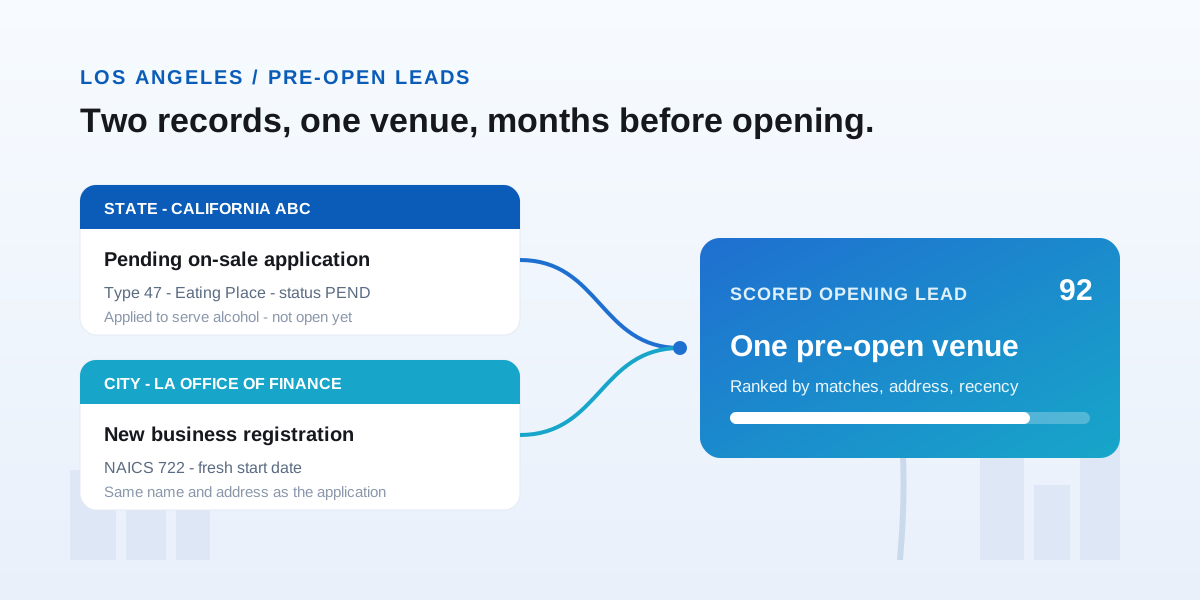
Every new Los Angeles restaurant you want to sell to is already in a public record. It’s just split across two of them.
By the time Sushi Palace or High Tide shows up on Resy, it has a POS, an insurance policy, and a full kitchen. The deals are done.
New restaurant openings in Los Angeles show up in public records one to six months before the doors open. The catch is that LA splits the signal: a pending liquor application sits with the state, and a new business registration sits with the city. Read both and match them, and you reach the owner while they’re still choosing vendors.
Chicago hands you both records in one dataset. LA makes you do the join. Let me show you exactly how, whether you work it by hand or pull it by API.
What does “opening soon” mean for an LA restaurant?
An LA restaurant that’s opening soon has committed to opening but hasn’t served a paying customer yet. It has applied for a liquor license and registered the business, so money is moving and vendors aren’t chosen. That’s the opposite of a place already open, where the POS, the distributor, and the insurance are already locked in.
Think about who this window is for.
If you sell point-of-sale systems, you want the owner before they sign with Toast.
If you distribute food, pour beer, or install kitchen hoods, the first vendor in usually stays.
And the timing is not a guess. About 71% of operators finalize their key vendor decisions before the grand opening, and the average restaurant runs more than 40 vendors, per RestaurantData.com. Reach an owner after opening and most of those seats at the table are taken.
Why LA’s dining guides can’t help you
The pages that rank for new restaurant openings in Los Angeles are built for diners, not for you. The Infatuation, Time Out, LAmag, Resy, and Eater LA publish great lists of where to eat this week. Every one covers a restaurant at or after opening, which is the moment it stops being a lead.
Type that phrase into Google yourself. The whole first page is dining guides, and not one of them is a lead source.
That’s the trap. Those pages answer “where should I eat in LA tonight,” not “who’s about to open so I can sell to them.” Same words, opposite intent.
And LA produces a lot of these openings. The city set a record with 758 new restaurants in 2025, up from 729 in 2024, according to Crosstown LA reading more than 15 years of business-license data from the LA Office of Finance. Roughly 539 of those were full-service. That’s your pipeline, and the guides only name a venue once it’s too late to sell to it.
Where do new LA restaurants show up first?
New LA restaurants show up first in two public systems, not one. The state’s Alcoholic Beverage Control board logs a pending liquor application, and the City of LA Office of Finance logs a new business registration. Chicago puts both in a single dataset. Los Angeles makes you join a state record to a city record yourself.
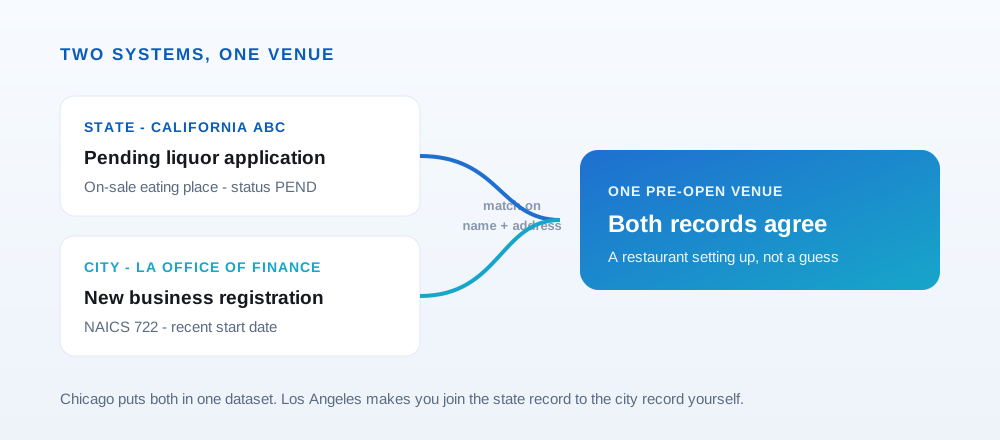
Here’s what the public signals are and where each one lives.
| Signal | Where it lives | What it tells you | Typical lead time |
|---|---|---|---|
| Pending on-sale liquor application | California ABC (state) | A venue applied to serve alcohol but isn’t open | ~60-120 days before opening |
| New business registration (NAICS 722) | LA Office of Finance (city) | A food or drink business registered at a new address | Weeks to months |
| Building / build-out permit | LADBS (city) | A kitchen or dining buildout is underway | ~90-150 days |
| Food facility permit | LA County Public Health | A kitchen is being permitted to operate | Close to opening |
The two you can work fastest are the liquor application and the business registration, because both are searchable open data and both appear early. The building and health permits are useful confirmation, but they live in yet more systems. That fragmentation is the real story of finding openings in LA, and it’s why one record on its own will mislead you.
How to search California ABC for pending LA restaurants
To find pending LA restaurants at the state level, search the California ABC License Query System, filter to on-sale eating-place license types, and keep only applications with a pending status. A pending on-sale application is the earliest public signal you get: the operator has applied to serve alcohol but hasn’t opened. It comes with the premises address and the business name.
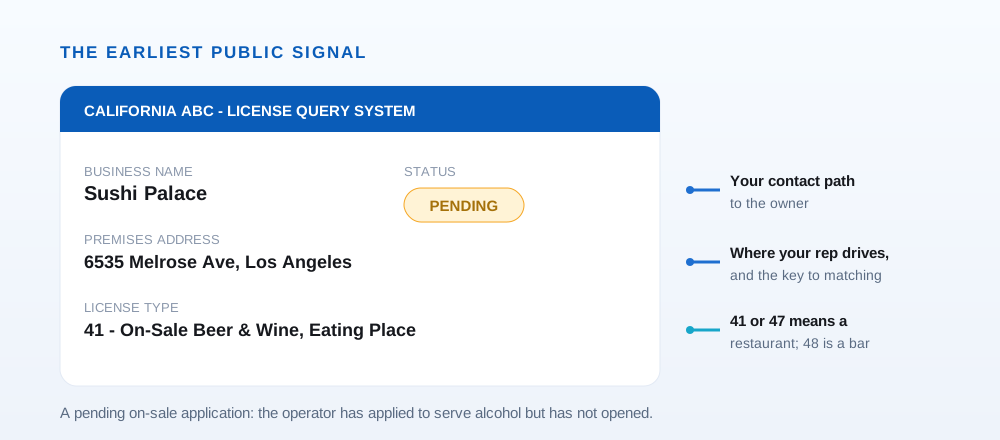
Here’s the concrete recipe.
Open the free California ABC License Query System and search by county or city.
Focus on the on-sale eating-place types. Type 41 is On-Sale Beer and Wine for an eating place, and type 47 is On-Sale General for an eating place. Both mean a restaurant. Type 48 is a bar or public premises.
Then keep only the pending applications, not the licenses already issued to open businesses. A pending on-sale application is a venue that has applied but isn’t serving yet. What that license costs tells you how serious the applicant is, since a full type-47 in California is a real investment.
This list is never short. In the LA pending on-sale feed right now sit Sushi Palace on Melrose Ave, High Tide on E 4th St, and Yai Restaurant on Hollywood Blvd. Each one applied for a license, and none is serving a paying customer yet.
How to cross-check the LA city business registry
Cross-check a pending liquor application against the City of LA’s business registry to confirm a real opening. The Office of Finance publishes its Listing of Active Businesses as open data. Filter it to food-and-drink registrations, which carry a NAICS code starting with 722, and a recent start date. A liquor application plus a fresh 722 registration at the same name or address is a restaurant setting up.
Open the Listing of Active Businesses on the LA open-data portal and filter naics to codes starting with 722. That prefix is food services and drinking places. Sort by the location start date, newest first.
Why bother with the second record? Because one signal alone lies to you.
A lone liquor application can be a change of ownership at a bar that’s been open for years. A lone business registration can be a catering office with no storefront. When a pending on-sale application and a new 722 registration line up at the same name and address, the guesswork drops out. That’s a venue building a restaurant.
How far ahead can you find an LA opening?
You can usually find an LA restaurant one to six months before it opens. The liquor application is the clock. An operator applies during buildout because ABC approval takes weeks, so the pending record appears well before opening night. PourWire, which tracks LA filings, measures a median of about 49 days from a venue’s first public record to opening, with liquor applications surfacing 60 to 120 days out.
The practical move is to watch the pending feed weekly. California ABC adds new applications constantly, and an application filed this week is a venue you can reach while it’s still deciding who to buy from.
Wait for the guide, or the Resy listing, or the ribbon-cutting photo, and you’re reading about a restaurant that finished shopping months ago.
How do you score which LA openings are worth your time?
Score an LA opening by how many records point at the same venue and how recent they are. One pending liquor application is a maybe. A pending application plus a new NAICS-722 business registration at the same name and address, both filed this quarter, is a near-certain new restaurant. Recency matters too, because a stale application often means a project that stalled.
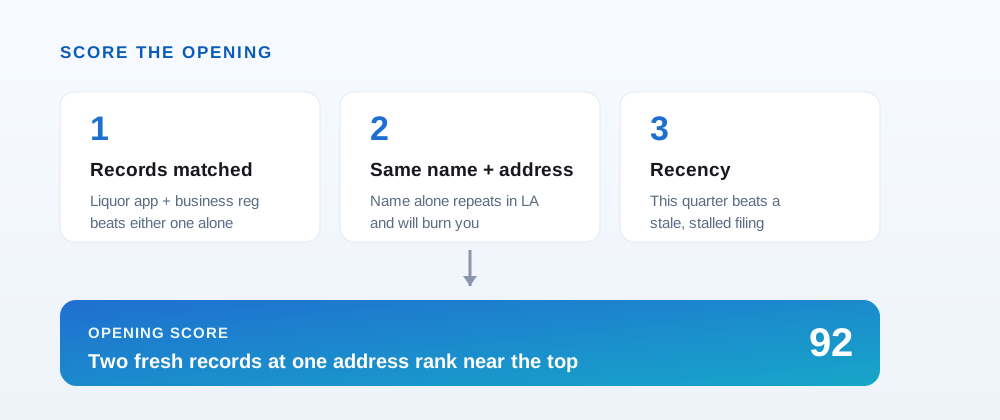
So build a simple score.
Give a venue points for each distinct record type. A liquor application and a business registration beat either one alone.
Give it more points when the records share a name and an exact address. Matching on business name alone will burn you, because LA names repeat across the county.
Weight recent records higher. A pre-open window moves, and an application from ten months ago that never paired with a registration is probably a project that died.
What a strong LA lead looks like
A strong LA lead is one venue with two fresh records agreeing on it. Picture a pending On-Sale General application (type 47) for a storefront on the Eastside, and a new NAICS-722 business registration at the same address from the same month. Two records, one address, both this quarter. That’s not a maybe. That’s a restaurant opening this season.
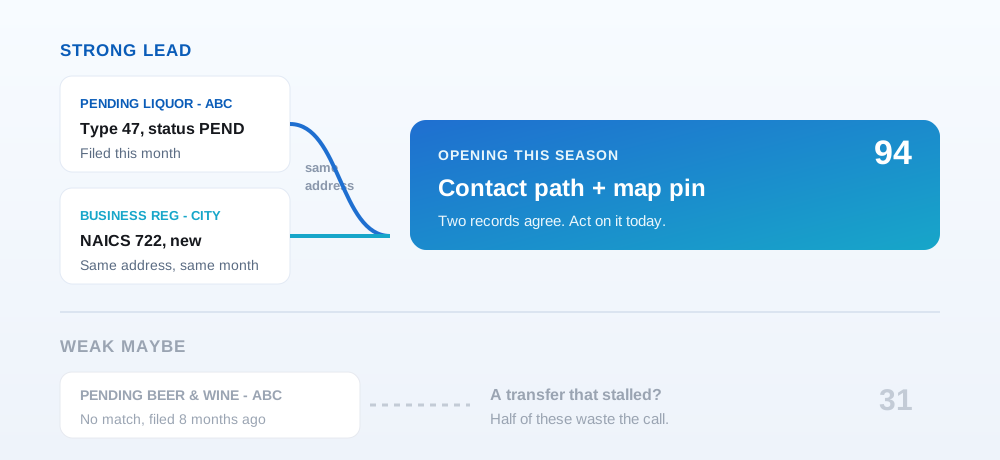
Compare it to the weak version. One pending beer-and-wine application, no matching registration, filed eight months ago. Could be a real project. Could be a transfer that stalled. You’d call and find out, and half the time you’d waste the call.
The strong lead also hands you a contact path and a map pin. The business name is something you can look up for an owner, and the premises address tells your rep exactly where to drive.
This is why matching two records beats a raw ABC download. A CSV of every pending California application is noise, most of it nowhere near your territory. Two records agreeing on one LA address is a lead you can act on today.
How RestoSignals covers Los Angeles in one call
RestoSignals fuses California’s pending on-sale liquor applications with new LA business registrations into one venue record with an opening score, so you get a ranked list of pre-open LA restaurants without joining two datasets by hand. California is live, and every lead is scored on how many records match, whether they share a name and address, and how recent they are.
The score is the part that saves your week. Instead of reading raw application rows and guessing which are real, you get venues already ranked by how likely each is to be a soon-to-open restaurant.
To put a number on the pipeline: the RestoSignals feed currently holds 777 pending on-sale food-and-drink applications in LA County, 273 of them inside the City of LA, and 684 are restaurant eating-place types. That’s the raw material the score sorts for you.
A few other tools track LA filings too. The difference here is the state-plus-city fusion, the opening score, and the fact that you can call it from code or point an AI agent at the hosted MCP endpoint and ask for new LA openings. A weekly email list can’t do the agent part.
The free tier is 100 leads, no card, and one credit equals one returned lead. That’s enough to test whether the LA venues in your territory are worth a workflow before you pay anything.
Start with one LA neighborhood this week
Pick the neighborhood where you already sell. Pull the last 30 days of pending on-sale applications for that area from California ABC, then match them against fresh NAICS-722 registrations in the LA business data. That’s your first batch of pre-open LA leads, free, in about an hour.
Then decide whether you’d rather run that state-plus-city join every week by hand, or let an API return it scored in one call. Either path beats waiting for a dining guide to name a place your competitor sold to a month ago.
New restaurant openings in Los Angeles are public the whole time they’re being built. The only question is whether you read them first.
Mukul Dutt is the founder of RestoSignals, an API that surfaces restaurants and bars before they open by fusing public liquor, permit, and business-filing records into one scored venue.
FAQ
How do I find new restaurants opening in Los Angeles before they open?
Search two public records and match them. In the California ABC License Query System, look for a pending on-sale eating-place application (license type 41 or 47) with a recent date. Then check the City of LA Office of Finance business data for a new NAICS-722 registration at the same name or address. A pending liquor application plus a fresh food-business registration is a restaurant setting up. A lead API returns the same records already matched and scored.
Where can I search for pending LA restaurant and liquor licenses?
The California Department of Alcoholic Beverage Control runs a free public License Query System at abc.ca.gov, where you search pending and active licenses by name, address, or county. For the business side, the City of LA Office of Finance publishes its Listing of Active Businesses as open data at data.lacity.org. Both are free and public, and together they cover the two signals a new LA restaurant leaves behind.
How far in advance can you find an LA restaurant before it opens?
Usually one to six months. An operator files a liquor application during buildout, so the pending record appears well before opening night. PourWire, a lead service tracking LA filings, measures a median of about 49 days from a venue's first public record to opening, with liquor applications surfacing 60 to 120 days out. That is a wide enough window to work a real sales cycle.
How many new restaurants open in Los Angeles each year?
About 758 new restaurants opened in Los Angeles in 2025, a record, up from 729 in 2024, according to Crosstown LA reading city business-license data from the LA Office of Finance. Roughly 539 of the 2025 openings were full-service. LA has around 15,000 restaurants in total, so the pipeline of new openings is steady and large.
Is there an API for Los Angeles restaurant opening leads?
Yes. RestoSignals covers California today and exposes new-opening leads as a REST API and a hosted MCP endpoint, fusing California pending liquor applications and LA business registrations into one scored venue. You can call it from code or point an AI agent at the MCP endpoint. The free tier is 100 leads, no card, and one credit equals one returned lead.
Do most new LA restaurants fail in the first year?
No. The 90% first-year failure claim is a myth traced to a 2003 commercial, not a study. Bureau of Labor Statistics data puts real first-year closure near 17%, and Datassential measured just 0.9% for 2025 openings. The LA venue you sell to this quarter is very likely still open and still buying next year.
Find venues opening near you
100 free leads, no card. One platform for restaurants & bars about to open.