How to sell to new restaurants before they open
How to sell to new restaurants before they open: find them in public permit and license records, and reach the owner while they're still choosing vendors.
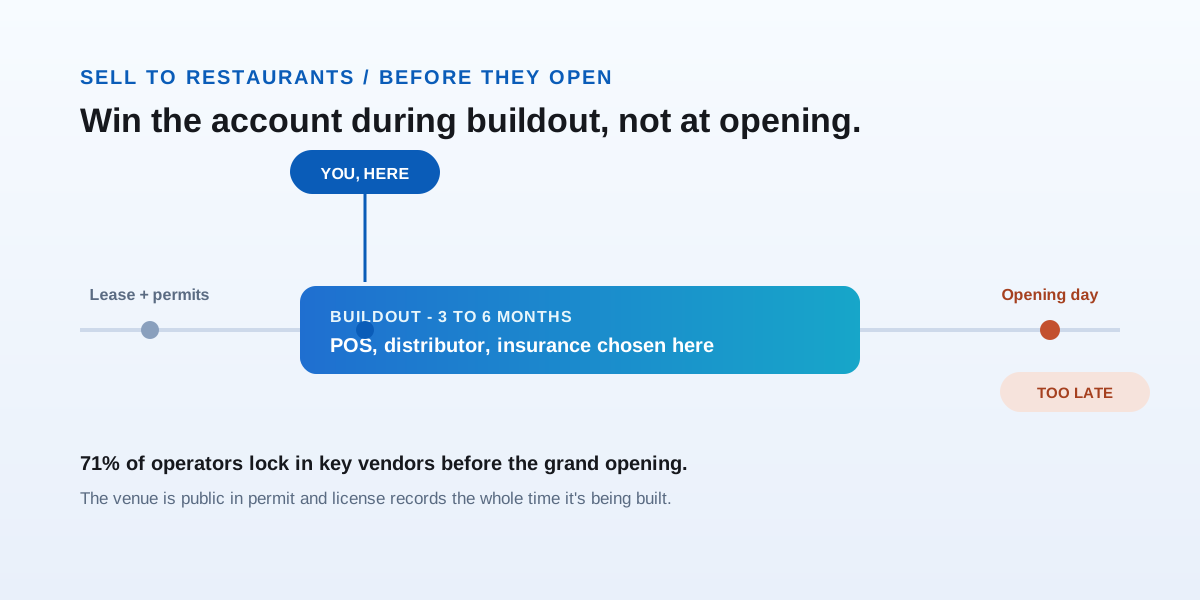
The best restaurant account you’ll win this year isn’t open yet.
By the time it’s serving customers, it already has a POS, a food distributor, and an insurance policy. You’re the fifth call, and the answer is no.
To sell to new restaurants before they open, you find them in public records during their buildout, not after the ribbon-cutting. A restaurant applies for liquor licenses, pulls building permits, and registers the business months before it opens, and it picks most of its vendors in that same window. Reach the owner then and you’re the first call, not the last.
Here’s the play, start to finish.
Why selling before a restaurant opens beats selling after
Selling before a restaurant opens works because the buying decisions happen before it opens. About 71% of operators finalize their key vendor choices before the grand opening, and the average restaurant runs more than 40 vendors, according to RestaurantData.com. Reach an owner after opening and most of those seats are already filled by whoever got there first.
And the first vendor in tends to stay in.
An existing supplier already knows the account: the receiving hours, the standards, the ordering patterns, the owner’s quirks. Switching resets all of that to zero, so a restaurant rarely swaps a working vendor for a small saving, as Gourmet Marketing lays out. That’s a wall you’re behind the day the doors open. It’s an open door two months earlier.
This isn’t speculative pipeline either. About 99% of new-opening leads ultimately open for business, per RestaurantData. A venue that filed for a license and pulled permits is a business that almost always opens.
There are a lot of them. Roughly 16,718 new restaurants opened in the US in 2025, and about 88% were independents, per RestaurantData. Independents are the owners nobody has sold to yet.
Which vendors win most from selling early
Selling early pays off most for the vendors a restaurant commits to once and rarely revisits. Point-of-sale, food distribution, insurance, and merchant services all get chosen during buildout and then run on autopilot for years. If your product carries a contract or a switching cost, the pre-open window is where the whole deal is decided.
Here’s who gains the most.
-
POS and payments. Picked in the first week of setup and painful to rip out later. Miss buildout and you’re asking an owner to retrain staff on a new system.
-
Food and beverage distributors. Restaurants open accounts with several, and the first broadliner in usually becomes the default order.
-
Insurance and workers’ comp. Bound before the doors open, because the lease and the lender both require it.
-
Equipment, hoods, and buildout trades. Bought once, during construction, and then the job is done.
-
Payroll, scheduling, and merchant services. Set up pre-open and sticky the moment staff are trained on them.
When does a new restaurant actually choose its vendors?
A new restaurant chooses most of its vendors during the buildout, in the three to six months between signing a lease and opening. Permits and construction usually run 3 to 6 months, and the POS, distributor, and insurance decisions get made inside that stretch. The POS is often picked and signed in the first week of setup, weeks before a single table is served.
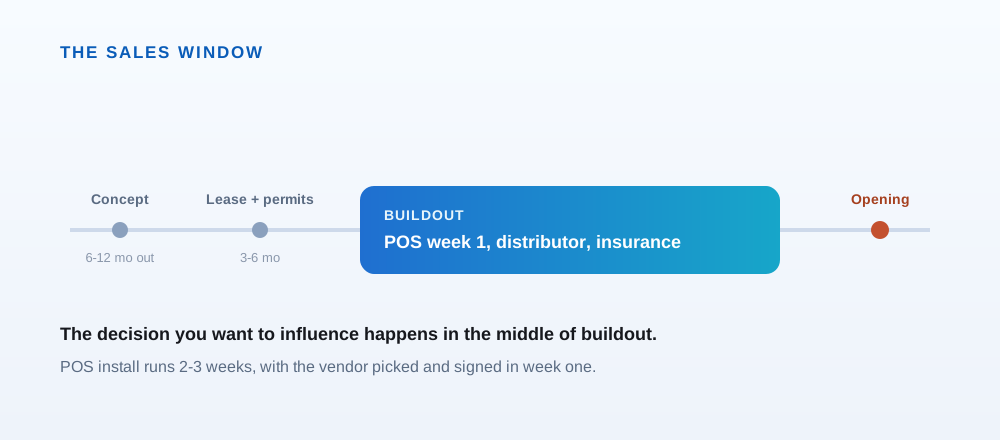
Walk the timeline. Concept to open is 6 to 12 months, and permits alone can take 3 to 6 months.
Once construction wraps, an operator has about 6 to 8 weeks to get ready, and the POS install runs 2 to 3 weeks inside that, with the vendor picked in week one, per SkyTab.
So the decision you want to influence happens in the middle of buildout, not on opening day.
Wait for the opening and you’re not early. You’re late to a decision that closed weeks ago.
Where do pre-opening restaurants show up in public records?
Pre-opening restaurants show up in four kinds of public record: alcohol license applications, building permits, business or DBA registrations, and state incorporation filings. Each is filed weeks to months before opening. RestaurantData reports that about 85% of new-opening leads surface 2 to 12 weeks out, and some as early as six months.
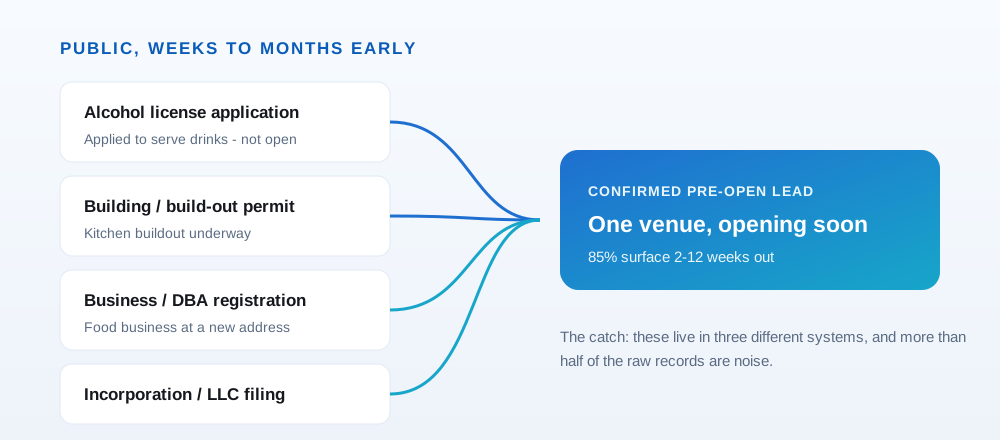
Here’s what each signal tells you and how early it lands.
| Signal | What it means | Typical lead time |
|---|---|---|
| Alcohol license application | An owner applied to serve drinks; the venue isn’t open | 2-12 weeks, up to 6 months |
| Building / build-out permit | A kitchen or dining buildout is underway | 3-6 months |
| Business / DBA registration | A food business registered at a new address | Weeks to months |
| Incorporation / LLC filing | The operating entity was just formed | Earliest, most speculative |
None of this is secret. It’s all public, and on a Quora thread asking how to find new restaurants before they open, the top answer is the same: liquor licenses and building permits are public and carry the owner’s contact.
The catch is that the records are scattered. The alcohol application sits with a state board, the permit with a city department, the registration with a county or city registry. And most of what you pull is noise. RestaurantData discards more than half of its potential records as outdated, duplicated, cancelled, or too speculative.
How to find restaurants opening soon, step by step
To find restaurants opening soon, work one territory at a time and stack the public signals. Pull recent alcohol applications and new food-business registrations for your area, match them by name and address to confirm a real opening, score what’s left by recency, then find the owner and reach out during buildout. The whole loop takes about an hour a week by hand.
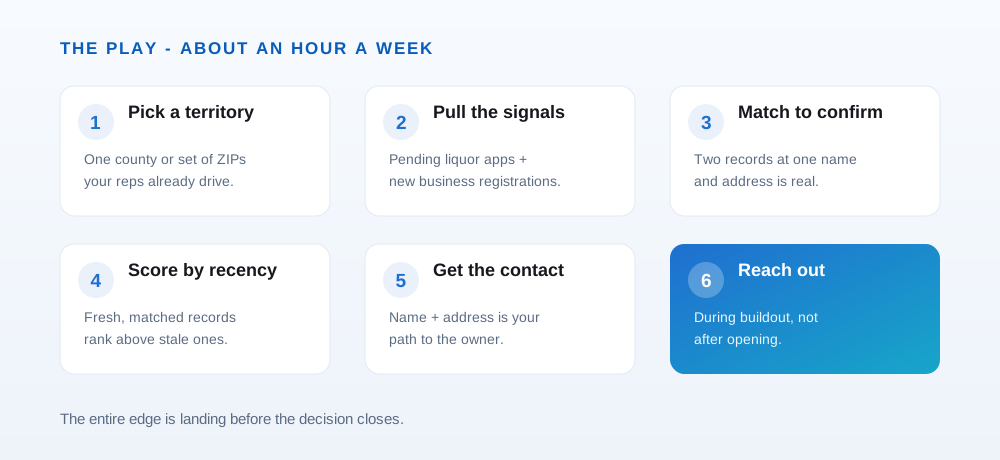
Here’s the play, step by step.
-
Pick your territory. One county, or a set of ZIP codes where your reps already drive. Narrow beats broad.
-
Pull the pending signals. Your state alcohol board for pending applications, and the city or county open-data portal for new business registrations and building permits. All free. The city guides for New York, Chicago, and Los Angeles show the exact filters.
-
Match records to confirm. One record lies. A lone liquor application might be a transfer at an old bar. Two records agreeing on the same name and address is a real opening.
-
Score by recency and matches. A venue with two fresh records this quarter beats a lone filing from ten months ago that may have stalled.
-
Get the owner’s contact. The filing carries the business name and address, and that’s your path to the owner. About 90% to 95% of pre-open records include an owner name or entity, per RestaurantData.
-
Reach out during buildout. Not after opening. The entire edge is landing before the decision closes.
What to say when you reach a pre-open owner
When you reach a pre-open owner, lead with timing, not a pitch. Tell them you work with restaurants in the area, you saw they’re opening soon, and ask what they’ve locked in and what’s still open. You’re not closing on that call. You’re getting in before the decision, which is the one thing a competitor who shows up at opening can’t buy back.
An owner mid-buildout is drowning in choices and deadlines. Being early and useful beats being loud.
Do a little homework first. Read the concept, the menu if it’s posted, the neighborhood. A place selling itself on local sourcing wants a different opening line than a 200-seat sports bar.
Picture it concretely. Say you roast coffee. You see a new cafe pulled a permit on your street and registered the business last month. You call and say you supply a few spots nearby, you saw they’re opening on Pine, and you ask if they’ve settled on a coffee program yet. That’s not a cold pitch. That’s a neighbor who happens to sell what they need, three weeks before they’d have started Googling for it.
Then make it easy to say yes to a next step, not to a contract. A quick call, a sample, a walk-through of the space. You’re building the relationship the incumbent vendor doesn’t have yet, because there is no incumbent yet.
Why a scored feed beats mining records by hand
Mining the records by hand works, but it doesn’t scale, because more than half of what you pull is noise. RestaurantData discards over half of its potential records as outdated, duplicated, cancelled, or too speculative. Doing that filtering yourself, across a state alcohol board and a city permit portal, every week, is the part that quietly eats your selling time.
By hand, the cost is free and the cost is time. You’ll spend a chunk of every week pulling, deduping, and guessing which records are real.
A scored feed does that work for you. It fuses the signals, drops the duplicates, and ranks what’s left, so you open a list that’s already sorted by how likely each venue is to be a real, soon-to-open restaurant.
That’s the trade. Free and slow by hand, or paid and ranked in one call. For a team carrying a quota, the math usually favors getting the hour back.
How RestoSignals gives you pre-open leads in one call
RestoSignals fuses public liquor, permit, and business-filing records into one scored pre-open venue, so you get a ranked list of restaurants opening soon without stitching agencies together yourself. It covers seven states today and returns leads as a REST API and a hosted MCP endpoint, so a rep or an AI agent can pull this quarter’s openings in your territory in one call.
The score is the part that saves your week. Instead of reading raw filings and guessing, you get venues already ranked by how many records match, whether they share a name and address, and how recent they are.
Every lead carries the business name and address, your path to the owner. Where the public record includes a phone or an owner’s mailing address, that rides along too, though the depth varies by state.
The free tier is 100 leads, no card, and one credit equals one returned lead. That’s enough to test whether the openings in your territory are worth a workflow before you pay anything. If you want the manual version first, what a liquor license costs is a good read on how serious a pending applicant really is.
Start with your territory this week
Pick the county where you already sell. Pull the last 30 days of pending liquor applications and new food-business registrations, match them by name and address, and you’ve got your first pre-open list, free, in about an hour.
Then decide whether you’d rather run that every week by hand or let an API return it scored in one call. Either way, the move is the same. Reach the owner during buildout, not after the ribbon-cutting.
Learning how to sell to new restaurants before they open is really just learning to read the records they leave months ahead. Your competitor is still waiting for the opening.
Mukul Dutt is the founder of RestoSignals, an API that surfaces restaurants and bars before they open by fusing public liquor, permit, and business-filing records into one scored venue.
FAQ
How do I sell to a restaurant before it opens?
Find it in public records during buildout and reach the owner then. A new restaurant files an alcohol license application, pulls building permits, and registers the business months before opening, and it picks most vendors in that window. Pull those filings for your territory, match them by name and address to confirm a real opening, then contact the owner while decisions are still open. That's earlier than any dining guide will tell you.
When do new restaurants choose their vendors?
During the buildout, in the three to six months between signing a lease and opening. Permits and construction run 3 to 6 months, and the POS, food distributor, and insurance choices get made inside that stretch. The POS is often selected and signed in the first week of setup, weeks before the first table is served. Reach an owner after opening and the decisions are already made.
What's the best way to find restaurants that are opening soon?
Public records beat dining guides. Your state alcohol board lists pending liquor applications, and city or county open-data portals list new business registrations and building permits. Each is filed weeks to months before opening and carries the business name and address. A dining guide only names a venue once it opens, which is when it stops being a lead. A scored lead feed returns the same records already matched and ranked.
How far before opening can you find a new restaurant?
Usually 2 to 12 weeks, and sometimes up to six months. RestaurantData reports that about 85% of new-opening leads are identified 2 to 12 weeks before opening, with some spotted as early as six months out. The alcohol application is the clock, since approval takes weeks, so the pending record appears well before opening night. That is a wide enough window to work a full sales cycle.
Are pre-opening restaurant leads worth it?
For most vendors selling to restaurants, yes, because the buying happens before opening and the first vendor in usually stays. About 99% of new-opening leads ultimately open, per RestaurantData, so it is real pipeline, not speculation. The value is timing: you reach the owner while decisions are open, not after a competitor has locked them in. You can mine the records free yourself or buy the list already scored.
Do most new restaurants fail in the first year?
No. The 90% first-year failure claim is a myth traced to a 2003 commercial, not a study. Bureau of Labor Statistics data puts real first-year closure near 17%, and Datassential measured just 0.9% for 2025 openings. The new restaurant you sell to this quarter is very likely still open and still buying next year, which is exactly why the account is worth winning early.
Find venues opening near you
100 free leads, no card. One platform for restaurants & bars about to open.